
Putin’s Attack on European Militarization: Context and Background
Introduction: A New Confrontation in Europe
Since Russia’s full‑scale invasion of Ukraine in 2022, relations between Moscow and the European Union have deteriorated to their lowest point in decades. Western states have poured arms, money, and political support into Kyiv, while European governments accelerate defense spending and long‑term rearmament plans. Against this backdrop, Vladimir Putin’s recent broadside against European “militarization” marks a new rhetorical and strategic phase in an already dangerous confrontation.
At the heart of the dispute is a mutually reinforcing cycle: Russia frames Europe’s defense buildup as proof of an aggressive NATO agenda, while European capitals see their actions as a reluctant but necessary response to Russian revisionism and military pressure. The result is a security environment that increasingly resembles the most tense moments of the late Cold War, but with the added complexity of cyber warfare, drones, and fragmented global power centers.
What Putin Actually Said in Sochi
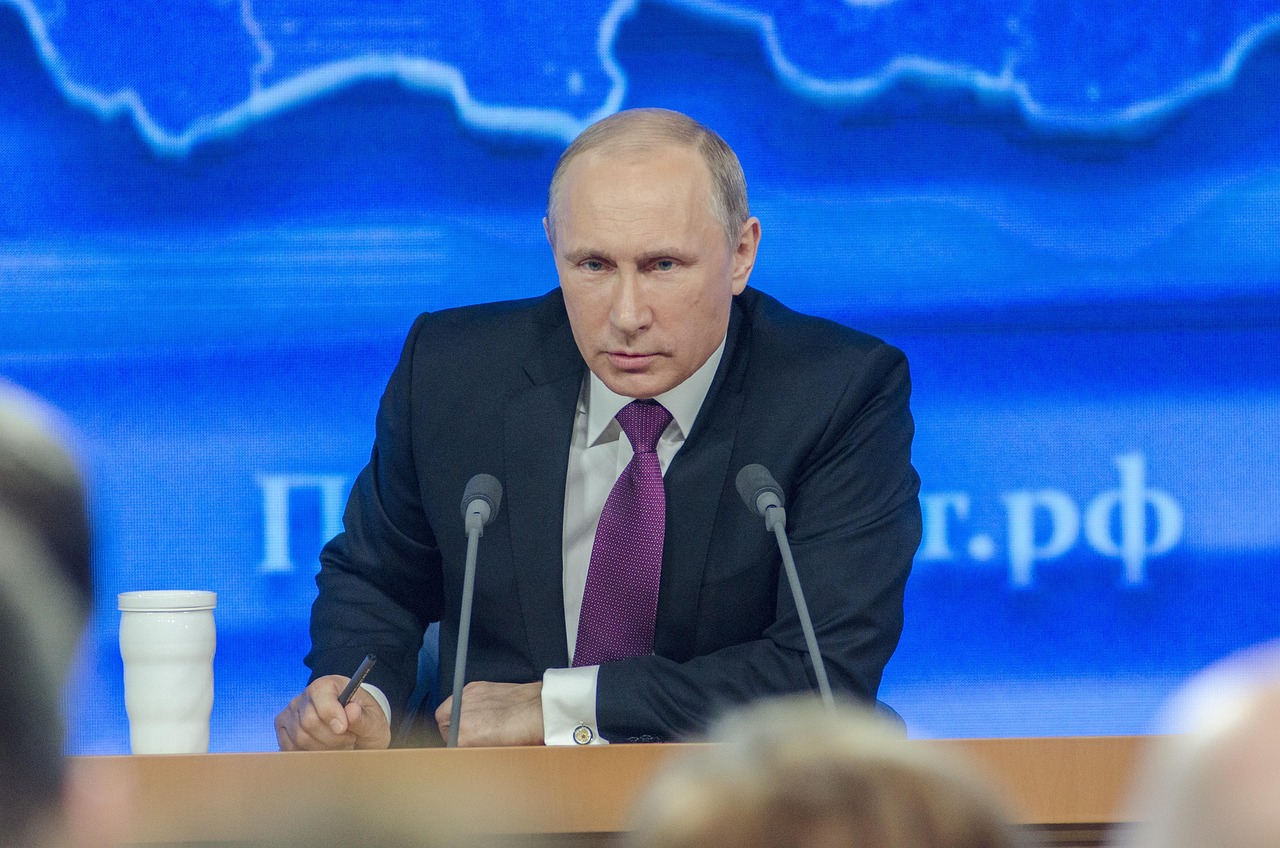
Speaking at a high‑profile foreign‑policy forum in Sochi, Putin devoted a substantial part of his address to warning about what he called the “accelerating militarization of Europe.” He dismissed the notion that Russia plans to attack NATO as “nonsense,” arguing that such claims are designed to frighten European publics and justify enormous defense budgets. According to his framing, Western leaders are not responding to a real Russian threat but deliberately manufacturing hysteria to cement domestic unity, marginalize dissent, and maintain U.S. strategic primacy.
Putin insisted that Russia “simply cannot ignore what is happening” as European states expand their armed forces, host new NATO deployments, and discuss long‑range strike capabilities that could reach deep into Russian territory. He pledged that Moscow “will never show weakness or indecisiveness” and that any perceived threat to Russian security or sovereignty would be met with a response that would be “convincing” and swift. This language was deliberately ambiguous, leaving open the possibility of military, hybrid, or nuclear‑signaling countermeasures.
Another key element of the speech was his assertion that Russia is “already fighting NATO” in Ukraine, not merely Ukrainian forces. By portraying Western military aid, intelligence sharing, and training as direct participation in the war, he framed the conflict as a larger civilizational struggle between Russia and the “collective West,” rather than a war of aggression against a neighboring state. That framing reinforces Moscow’s narrative at home and justifies the economic and human costs of a protracted conflict.
Targeting Germany and the NATO Narrative
Putin singled out Germany’s ambition to build “Europe’s strongest army” as a particularly dangerous development. In recent years Berlin has announced a historic multiyear modernization program, involving hundreds of billions of euros for tanks, combat aircraft, missile defense, drones, cyber capabilities, and even military space assets. For many in Europe, this is a belated effort to close long‑criticized capability gaps and meet alliance commitments. For Moscow, it revives memories of past wars and serves as a powerful propaganda tool when speaking to domestic audiences.
He further ridiculed Western politicians and commentators who warn of an imminent Russian invasion of NATO states, suggesting they are either “incredibly incompetent” or “simply dishonest.” By doing so, he attempted to undermine Western threat assessments and drive a wedge between policymakers and their publics. At the same time, he warned that if European states truly believe their own rhetoric and proceed with rapid rearmament, Russia will calibrate its doctrine and deployments accordingly, including movement of troops, missiles, and nuclear assets closer to NATO borders.
European Militarization: Drivers and Dynamics
European militarization did not arise in a vacuum. Russia’s annexation of Crimea in 2014, its support for separatists in eastern Ukraine, and its use of energy pressure and cyber operations had already shaken long‑standing assumptions about European security. The 2022 invasion, however, shattered remaining illusions and pushed even traditionally cautious states to embrace a more assertive defense posture. What was once politically unthinkable—large permanent increases in defense spending, heavy armor deployments in Eastern Europe, and joint missile defense projects—has become mainstream policy.
Several factors drive this shift:
- Perceived territorial threat: States on NATO’s eastern flank, such as Poland and the Baltic countries, see Russia’s actions in Ukraine as a rehearsal for possible future moves against them.
- Credibility of deterrence: To make NATO’s Article 5 guarantee credible, European countries feel compelled to field forces that can fight immediately, not just rely on American reinforcements.
- Lessons from Ukraine: The war has demonstrated the importance of stockpiles, industrial capacity, drones, air defense, and long‑range fires, prompting large and long‑term procurement programs.
- Domestic politics: Public opinion in many countries has shifted in favor of higher defense budgets, allowing political leaders to push through reforms that would have been blocked before 2022.
Germany’s vast modernization plan symbolizes this broader trend. It aims to transform the Bundeswehr into a highly mobile, technologically sophisticated force with expanded heavy brigades, upgraded air power, integrated missile defense, and robust cyber and space components. Poland, the Baltic states, and the Nordic countries are simultaneously investing in artillery, air defenses, coastal missiles, and advanced surveillance systems. The accession of Finland and Sweden to NATO further changes the military map in Northern Europe, turning the Baltic Sea into what some analysts call a “NATO lake.”
Drone Incidents and the Grey Zone
A visible manifestation of mounting tension is the rise in drone and airspace incidents. Fragments of suspected Russian drones have been found in or near the territory of several NATO states, sometimes during large missile barrages against Ukrainian targets close to the border. Fighter jets from Poland, Romania, and other allies have scrambled repeatedly in response to unidentified objects or aircraft approaching alliance airspace. In a few cases, drones have briefly violated NATO territory before being shot down or crashing.
These incidents occupy the so‑called “grey zone” between peace and open war. On paper, any attack on NATO territory could trigger Article 5 consultations, but in practice allies are cautious about labeling every drone incursion as a deliberate attack. Moscow can test alliance reactions, gather intelligence, and sow anxiety without crossing a clear red line. For NATO, the challenge is to respond robustly enough to deter further incidents, while avoiding an overreaction that could escalate into direct conflict.
The alliance has begun to adapt by improving air‑defense integration, deploying additional sensors and counter‑drone systems, and launching new operations to reinforce its eastern flank. However, the very act of strengthening defenses can feed into Moscow’s narrative that NATO is expanding militarily toward Russia’s borders, thereby justifying further Russian military moves. This feedback loop of action and reaction is one of the most dangerous structural features of the current standoff.
Is a Full‑Blown War Imminent?
Most military and diplomatic analysts converge on the view that neither Russia nor NATO actively seeks an all‑out war. For Russia, a direct clash with the alliance would be massively risky: it would pit Moscow not just against individual European states, but against a coalition with far greater economic and technological resources, and it could quickly raise the specter of nuclear escalation. For NATO, a direct war with a nuclear‑armed power would bring incalculable dangers and domestic political backlash.
Yet low intent does not equate to low risk. The danger lies less in a deliberate decision to start a war and more in miscalculation, misinterpretation, or accidental escalation. A drone that crashes in a populated area, a missile that strays off course, a naval collision, or a cyber attack that spills over into critical infrastructure could all trigger a crisis. In a climate of mutual distrust and nationalist rhetoric, leaders might feel compelled to respond quickly and forcefully, leaving little room for de‑escalation.
Putin’s statements are thus best understood as both deterrent and performative. Externally, he seeks to convince NATO that continued rearmament and deepening involvement in Ukraine will bring unpredictable consequences. Internally, he uses the image of a hostile, militarized Europe to justify the mobilization of Russian society, the restructuring of the economy on war‑footing lines, and the repression of dissent under the banner of national survival.
How Western Leaders Framed His Remarks
Western leaders have generally portrayed Putin’s speech as a mix of threat, denial, and deflection. Officials in Washington, Berlin, Paris, and Brussels emphasize that NATO’s posture is defensive and proportionate to Russia’s own actions. In their telling, if there is a militarization problem in Europe, it started with Russia’s decision to invade its neighbor, repeatedly strike civilian energy infrastructure, and conduct nuclear‑tinged signaling exercises.
NATO communications double down on the alliance’s core messages: it does not seek conflict with Russia, it will not send its own troops to fight in Ukraine, but it will defend every inch of member territory. Public reaffirmations of Article 5 are aimed both at deterring Moscow and at reassuring front‑line allies that they will not be left alone in a crisis. At the same time, Western leaders know that their domestic audiences are wary of escalation, so they try to balance tough rhetoric with careful, technical language about “calibrated” support and “responsible” deterrence.
Germany’s government, under intense scrutiny after being mentioned by name in Putin’s critique, has reiterated that its rearmament is anchored in NATO planning and EU coordination, not in unilateral ambitions for dominance. Berlin’s official line is that a stronger Bundeswehr contributes to shared deterrence and reduces overdependence on U.S. forces rather than reviving old hegemonic patterns. Nonetheless, the symbolism of a heavily rearmed Germany remains sensitive both at home and abroad, which Moscow exploits in its messaging.
Potential Escalation Triggers
Several plausible escalation pathways worry policymakers and analysts:
- Border incidents: A shoot‑down, collision, or misidentification incident along NATO’s eastern flank could create a sudden crisis, especially if casualties are involved.
- Deep strikes: If Ukraine acquires more long‑range strike options and begins hitting targets deeper inside Russian territory, Moscow may feel compelled to retaliate not only against Ukraine but also against Western suppliers or bases.
- Cyber escalation: Attacks on power grids, banking systems, or communications infrastructure could be interpreted as acts of war if they cause widespread damage, even if attribution is disputed.
- Domestic shocks: Political crises inside Russia or key European states could create incentives for leaders to externalize pressure, take risks, or use foreign policy to rally national unity.
In each scenario, the crucial variables are time and communication. The faster leaders feel they must respond, and the less they trust each other’s intentions, the greater the risk that an initially limited incident spirals into something larger. The erosion of arms‑control treaties and military‑to‑military contact mechanisms over the past decade has reduced the number of tools available to slow down a crisis and clarify misunderstandings.
Global Security and Nuclear Shadow
The confrontation over European militarization has implications far beyond the continent. It accelerates the breakdown of the post‑Cold War security architecture and contributes to a more fragmented international system in which regional conflicts are increasingly entangled. Other powers—such as China, India, Turkey, Iran, and the Gulf states—watch closely, adjusting their own strategies and hedging options in light of perceived Western resolve or weakness.
Nuclear weapons cast a long shadow over every strategic calculation. Russia’s arsenal, together with that of the United States and the nuclear‑armed European allies, ensures that any uncontrolled escalation would carry catastrophic risks. Occasional references in Russian discourse to nuclear readiness, and NATO’s counter‑messaging on nuclear deterrence, are not merely rhetorical flourishes; they are signals meant to shape each side’s risk perceptions. As long as conventional forces on both sides are being reinforced, the temptation will exist to lean more heavily on nuclear signaling to compensate or deter.
Economically, the militarization of Europe diverts resources from social programs, climate transition, and post‑pandemic recovery into defense budgets and arms industries. While some argue that this creates high‑tech jobs and strengthens industrial capacity, others warn of a long‑term guns‑versus‑butter trade‑off that could fuel social discontent. Energy markets, already shaken by sanctions, pipeline disruptions, and the rapid shift away from Russian gas, remain volatile, with downstream consequences for inflation, public finances, and political stability.
Paths Toward De‑Escalation and Diplomacy
Despite the grim tone of recent speeches and policy moves, avenues for reducing the risk of catastrophe still exist. One set of options involves rebuilding basic channels of communication: re‑establishing military hotlines, regular deconfliction talks, and incident‑prevention mechanisms. Even during the Cold War, adversaries recognized the need for direct contact to prevent accidents from turning into wars. Restoring these habits does not require trust, only a shared recognition that uncontrolled escalation is in nobody’s interest.
A second track concerns arms control and transparency. Although several landmark treaties have collapsed or been suspended, elements of their logic can be revived or adapted. Reciprocal notifications of major exercises, limits or mutual understandings on the deployment of certain categories of missiles near borders, and inspections or observation missions could gradually rebuild predictability. Confidence‑building measures do not solve underlying political disputes, but they make it harder for those disputes to escalate by surprise.
Finally, there is the core conflict in Ukraine. Without some form of political settlement or at least a durable armistice, the incentives for both sides to keep escalating remain strong. Structured talks—possibly involving neutral or non‑aligned countries as mediators—could explore issues such as security guarantees, demilitarized zones, phased sanctions relief, and reconstruction frameworks. Any such process would be slow and contentious, but even partial arrangements (for example, agreements on prisoner exchanges, nuclear safety, or grain exports) can reduce tensions and build minimal confidence.
Conclusion: A Contested Future
Putin’s attack on European militarization crystallizes a wider strategic clash over the future of Europe’s security order. To Moscow, NATO enlargement, rising European defense budgets, and Germany’s rearmament prove that the West seeks containment and domination. To most European governments, Russia’s behavior since 2014 and especially since 2022 leaves them no choice but to invest heavily in deterrence and resilience. Between these visions lies a precarious balance, haunted by history and sharpened by new technologies.
Whether this period comes to resemble a stabilized cold peace or a slide toward wider war will depend on choices made in the coming years: how far Europe goes in building its military power, how Russia adjusts its doctrine and deployments, how both sides handle incidents and crises, and whether meaningful diplomatic initiatives can be revived. The stakes are not confined to the region; they touch the credibility of international norms, the trajectory of global power competition, and the long‑term risk of nuclear use. In that sense, the debate over European militarization is not a narrow technical issue, but one of the central questions shaping global security in the twenty‑first century.
FAQs: Putin’s Attack on European Militarization
1. What does Putin mean by “Europe’s militarization”?
Europe’s militarization refers to sharply rising defense budgets, large new weapons programs, and expanded NATO deployments across the continent, especially in states near Russia’s borders.
2. Why is Putin criticizing Germany specifically?
Putin highlights Germany because Berlin has announced plans to massively modernize its armed forces and become Europe’s strongest conventional military, which Moscow portrays as a direct security concern.
3. Did Putin say Russia plans to attack NATO?
Putin explicitly called claims that Russia plans to attack NATO “nonsense,” arguing such warnings are used by Western leaders to stoke fear and justify higher military spending.
4. How does Putin describe the war in Ukraine?
He claims Russia is effectively fighting NATO in Ukraine, insisting that Western weapons, intelligence and financing mean all NATO states are “engaged in hostilities” against Russia.
5. Why are European countries increasing their military budgets?
European NATO members argue that Russia’s invasion of Ukraine and repeated airspace and drone incidents prove the need for stronger deterrence and rapid‑reaction capabilities.
6. Are drone and airspace incidents really that dangerous?
Analysts warn that repeated drone incursions and close military encounters over Poland, Estonia or the Baltic Sea raise the risk of accidents that could unintentionally trigger a wider crisis.
7. Is a full‑scale Russia–NATO war likely?
Most expert assessments say neither side wants all‑out war, but the probability of inadvertent escalation is rising because of high tensions, heavy militarization, and weaker arms‑control arrangements.
8. How have NATO and Western leaders responded to Putin’s warnings?
Western officials largely dismiss his threats as intimidation, while reiterating that NATO is defensive, will keep arming Ukraine, and will respond collectively to any attack on an ally.
9. What are the main escalation triggers experts worry about?
Key triggers include border incidents, long‑range Ukrainian strikes on Russian territory using Western systems, major cyber attacks on infrastructure, and miscalculations during military exercises.
10. What diplomatic steps are proposed to reduce the risk?
Proposals include restoring military hotlines, expanding incident‑prevention mechanisms, reviving elements of arms control and transparency on exercises, and pursuing negotiations linked to the Ukraine war.