

Introduction
Few teams in sports history command the same respect and admiration as the Los Angeles Dodgers. Known for their innovation, consistency, and loyal fanbase, the Dodgers have built an empire that extends far beyond the baseball diamond. From their early days in Brooklyn, New York, to their dominance on the West Coast, their story is one of resilience, adaptation, and excellence.
The Dodgers’ journey through Major League Baseball (MLB) history is filled with legendary moments, Hall of Fame players, groundbreaking social change, and unforgettable championships. This is the story of how the Dodgers rose to become one of the most powerful teams in sports history.
From Brooklyn Beginnings: The Early Days (1880s–1930s)
The Dodgers’ history dates back to the 1880s, when they were founded as the Brooklyn Grays, later known as the Brooklyn Trolley Dodgers — a name inspired by Brooklyn residents dodging streetcars in the city’s bustling streets. The name “Dodgers” stuck, eventually evolving into the iconic title we know today.
In their early years, the team played in the National League and built a strong local following. By the early 1900s, the Brooklyn Dodgers had started establishing themselves as a competitive club. They faced ups and downs, but their fanbase remained loyal — something that would define the franchise for generations.
The 1940s: Breaking Barriers and Making History
The 1940s were a turning point not only for the Dodgers but also for the entire world of sports. Under the leadership of Branch Rickey, the Dodgers made one of the most courageous and historic moves in professional sports — signing Jackie Robinson in 1947.
Jackie Robinson became the first African-American player in Major League Baseball, breaking the color barrier and changing the game forever. His courage, skill, and perseverance not only elevated the Dodgers but also marked a monumental step in American civil rights history.
That same decade, the Dodgers emerged as one of the National League’s top contenders, frequently reaching the World Series, though often falling short to their rivals, the New York Yankees.
The 1950s: “Dem Bums” Finally Triumph
The 1950s marked the golden era of Brooklyn baseball. Led by stars like Pee Wee Reese, Duke Snider, Roy Campanella, Gil Hodges, and Jackie Robinson, the Dodgers became the heart of Brooklyn. Their slogan “Wait ‘Til Next Year” echoed through the borough every season as they came close to glory but couldn’t quite win it all.
Finally, in 1955, the dream came true. The Dodgers won their first-ever World Series championship, defeating the Yankees in seven thrilling games. The victory was not just a sporting triumph — it was a cultural celebration for Brooklyn and the entire baseball world.
The Move West: A Bold New Beginning (1958)
In 1958, a major shift changed the course of baseball history forever. The Dodgers relocated from Brooklyn to Los Angeles, becoming the first MLB team on the West Coast. The move shocked many fans, but it opened new opportunities in a rapidly growing region.
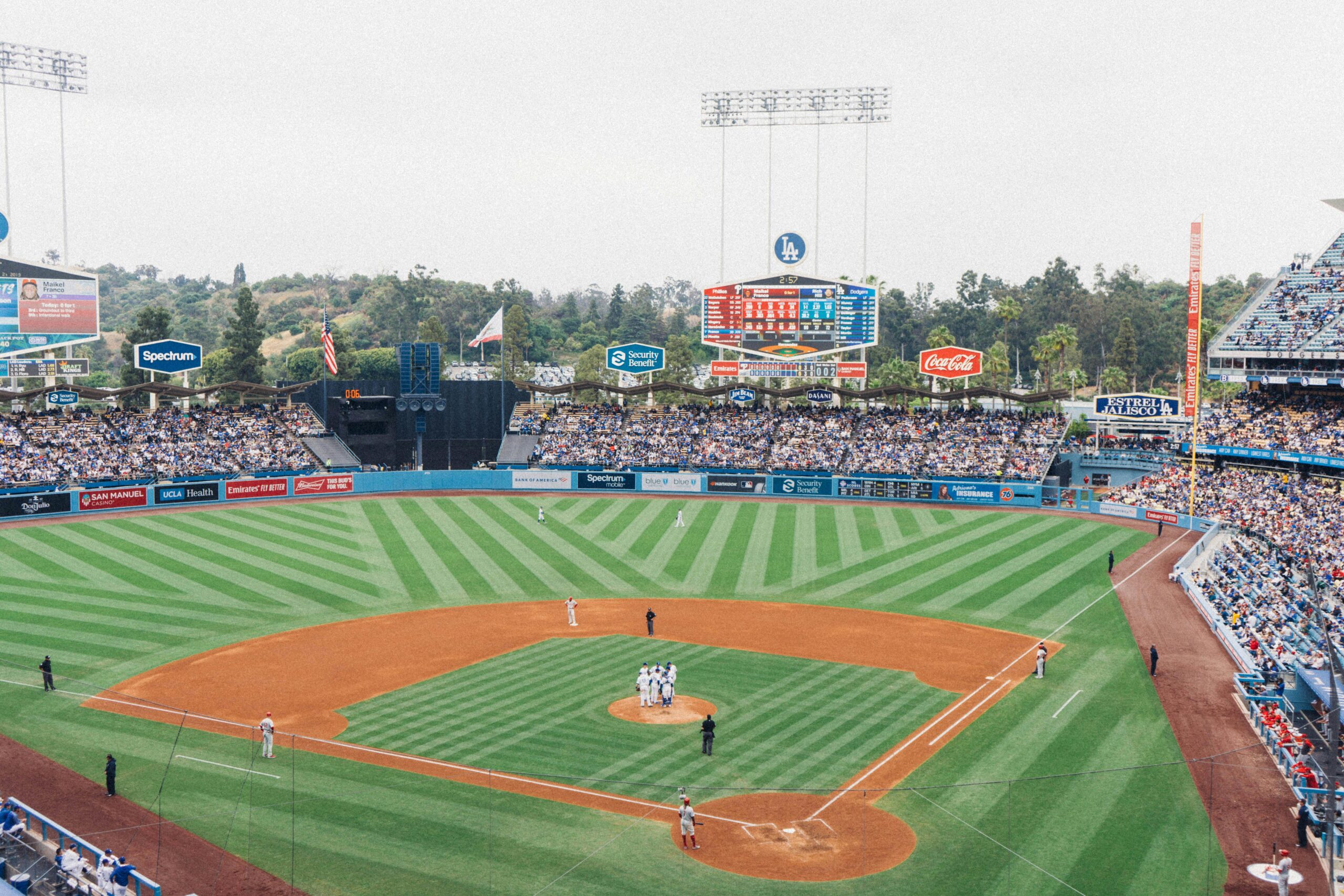
The newly named Los Angeles Dodgers quickly made their mark in their new home. Playing at the Los Angeles Memorial Coliseum and later at Dodger Stadium (opened in 1962), the team brought baseball to millions of new fans in California
The Koufax Era and 1960s Dominance
The 1960s were defined by one name — Sandy Koufax. The left-handed pitcher became one of the most dominant forces in baseball history. Between 1961 and 1966, Koufax won three Cy Young Awards, threw four no-hitters, and captured the 1963 and 1965 World Series titles for the Dodgers.
The team’s success in this decade also featured stars like Don Drysdale, Maury Wills, and Tommy Davis. Their combination of pitching power and team discipline made the Dodgers a model franchise.
The 1970s and 1980s: New Faces, Same Legacy
The 1970s brought a new generation of stars. Players like Steve Garvey, Ron Cey, Davey Lopes, and Dusty Baker carried the Dodgers into another era of success. Managed by Tommy Lasorda, the team built a reputation for hard work, leadership, and team chemistry.
Their efforts paid off in 1981, when the Dodgers captured another World Series title, led by rookie sensation Fernando Valenzuela — whose incredible debut sparked “Fernandomania” across America and brought a new wave of Latino fans to the sport.
In 1988, the Dodgers stunned the baseball world again by winning another World Series, highlighted by Kirk Gibson’s legendary walk-off home run in Game 1 — one of the most iconic moments in MLB history.
The 1990s–2000s: Challenges and Rebuilding
The 1990s were a period of transition. While the Dodgers continued producing talented players — including Mike Piazza, Eric Karros, and Hideo Nomo (the first Japanese pitcher to play in MLB in decades) — they struggled to capture another championship.
Despite ownership changes and front-office turbulence, the Dodgers remained one of baseball’s most recognized brands. Their focus on player development and scouting laid the groundwork for future success.
The Modern Era: From Rebuilding to Reigning (2010–Present)
The 2010s marked a resurgence for the Dodgers. Backed by strong ownership and innovative management, the team began to dominate once again. With stars like Clayton Kershaw, Justin Turner, Corey Seager, and later Mookie Betts and Freddie Freeman, the Dodgers became consistent playoff contenders.
Under manager Dave Roberts, the Dodgers built a culture of discipline, analytics, and teamwork — combining traditional baseball values with modern technology.
After several heartbreaking postseason exits, the Dodgers finally reclaimed baseball’s top spot by winning the 2020 World Series — their first in over three decades. The victory, achieved during a shortened season due to the COVID-19 pandemic, symbolized resilience and unity.
Legendary Players Who Defined the Dodgers
The Dodgers’ success has always been fueled by extraordinary talent. Some of the greatest names in baseball history have worn the Dodgers’ blue and white:
- Jackie Robinson – Broke baseball’s color barrier and became a civil rights icon.
- Sandy Koufax – A pitching legend known for his dominance and grace.
- Duke Snider – The “Duke of Flatbush,” one of Brooklyn’s most beloved heroes.
- Don Drysdale – Known for his toughness and strikeout power.
- Fernando Valenzuela – Sparked a cultural revolution with “Fernandomania.”
- Clayton Kershaw – One of modern baseball’s greatest pitchers.
- Kirk Gibson – Remembered for his unforgettable 1988 home run.
Each of these players contributed to the Dodgers’ rich legacy and global appeal.
The Dodgers’ Global Impact
Beyond wins and trophies, the Dodgers have become a global baseball brand. Their influence extends across continents — from Latin America to Asia, where they’ve helped grow the sport’s popularity. With fan bases in Mexico, Japan, Korea, and beyond, the Dodgers embody baseball’s global spirit.
Their commitment to diversity, inclusion, and community outreach has also made them one of the most respected sports organizations in the world.
Conclusion: A Legacy That Continues to Grow
From Brooklyn to Los Angeles, from Jackie Robinson to Mookie Betts, the story of the Dodgers is one of evolution, courage, and success. They’ve built a dynasty that transcends generations — one grounded in hard work, equality, and excellence.
Today, the Los Angeles Dodgers stand not only as champions of baseball but also as a symbol of perseverance and progress. Their legacy continues to inspire millions of fans, reminding us that greatness isn’t just measured by wins — it’s built through history, character, and heart.